Information which may be helpful to planning your own walk along the Bibbulmun Track.
Timing and weather
Cooler weather hiking is best for end-to-ending the Bib, ideally Autumn (April/ May) or Spring (September/ October).
A Winter end-to-end is possible however WA receives most of its rainfall during Winter and early Spring. As well as being very wet, temps can drop to well below freezing so Winter hikers need to be well prepared.
End-to-ending over summer is strongly discouraged due to risk of bush fire, heat stroke and limited water availability. Hikers have been rescued from the track due to heat stroke and bush fires in the past, aside from it putting an unnecessary strain on emergency services it doesn’t make for a fun time.
Other considerations,
- Wildflowers – peak time is September/ October
- Whale migration (southern) – September to November is the peak time for Southern Right’s and Humpbacks heading south
- Whale migration (northern) – June to August is the peak time to see Humpbacks heading into warmer waters.
- Direction of travel – if you are set on a particular direction of travel due to logistics or other personal reasons this may impact your timing. See Direction of travel below for recommendations.
- Peak season – Most people end-to-end in Spring. If you are seeking solitude on the track you may wish to walk in shoulder season.
- Track towns and resupply – some towns on the Bib only restock hiking food, gas and other supplies for peak hiking season. Peaceful Bay Caravan Park for example closes over winter. Additional planning outside of peak season may be required.
I commenced my hike just before Spring in late August 2025. I really wanted to see WA’s wildflowers in bloom and whilst slightly early in the season I chose this timing due to work commitments and other travel plans I had for the year. As it turned out, WA experienced record wet and cold Winter and Spring conditions in 2025. This resulted in spectacular wildflowers but I encountered more wet days than dry (26 out of 48), hail and consistent night time temperatures below freezing.

Conditions were colder and wetter than I anticipated despite living in the Blue Mountains on the East Coast.
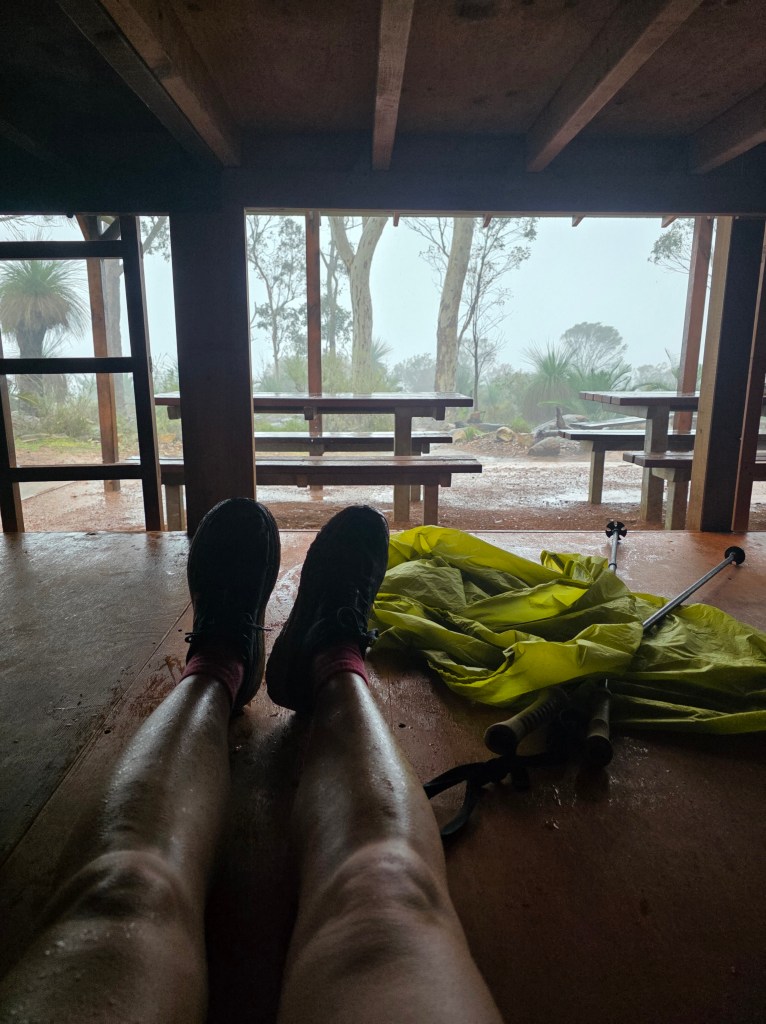
Starting a little early in the season despite the unseasonal weather meant the track was relatively quiet. Out of 35 nights spent in shelters I was alone for 11. The longest I went without seeing another person was 3 days and I spent most days walking alone. I found this to be a good balance. On the days when I did have company at campsites they were never overly busy, there was always plenty of room to sleep in the shelters which I did for all but one night.
During my time on the track I met a few hikers who end-to-ended NoBo during Winter. Whilst they experienced extremely cold and wet conditions they did find a lot of solitude on the track, hutting alone and rarely seeing other hikers. Consider what it is you are looking to get out of your hike.
Direction of travel
Whether you walk South Bound (SoBo) or North Bound (NoBo) will largely be driven by the time of year you are planning to hike the track.
If you are starting in Spring it is advisable to hike SoBo. The southern part of the track is cooler and wetter than the northern part of the track, by hiking SoBo the weather should theoretically warm as you approach the cooler sections of the track.
If you are starting in Autumn it is recommended to hike NoBo so you are walking away from the coldest, wettest parts of the track as Winter approaches.
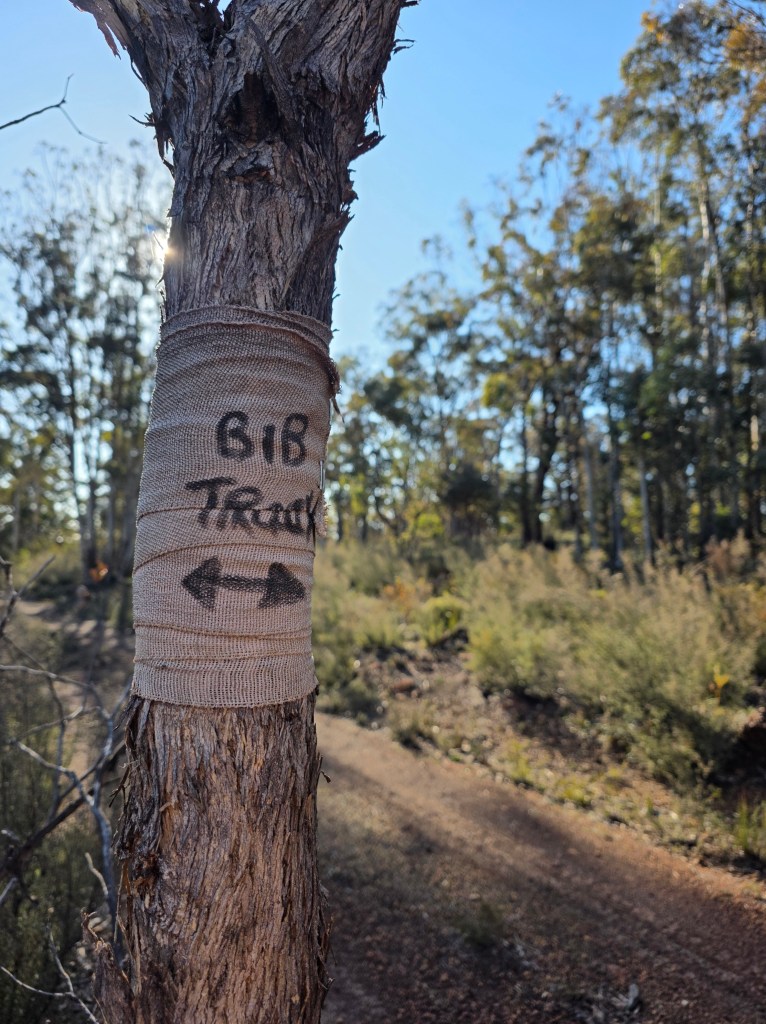
The above is general guidance only, these days the seasons can be erratic and your direction of travel may be impacted by other factors including logistics. I hiked the track SoBo starting late August 2025. This was to avoid the worst of the cold temps and rain on the southern part of the track and maximise my chances of seeing wildflowers.
Summer and Winter travel – see Timing above
Accessing the trail
Kalamunda
The Northern Terminus is an 18 minute Uber ride from Perth Airport or alternatively a train and bus which takes a little longer.

The trailhead is in town directly opposite a Coles supermarket and shopping complex. This makes it easy to pick up fresh food, and a lighter before heading out on trail.
For gas, the Mitre 10 is a 5 minute walk from the trail head.
I flew from Sydney and started the trail the same day. The only thing I would do differently – bring an Australia Post satchel to post my pack cover home after getting off the plane. I flew in on a weekend so the post office in Kalamunda was closed, I had to make a detour to find an LPO.
Albany
Trans WA runs regular busses (multiple each day) between Albany and Perth, these take anywhere from 6 to 8 hours depending on the route.
Adam met me in Albany with a rental car he picked up from Perth Airport. We made a holiday out of the trip north to Perth, spending some time in the Stirling Rages, hiking the Cape to Cape and enjoying some quality boozing time in the Margaret River before heading home.
Starting / finishing the Track
The campsites along the Bib have been thoughtfully spaced out to enable a half day of travel to/ from the trail.
- Hewitts Hill Campsite is 11km from Kalamunda
- Sandpatch Campsite is 12km from Albany

When planning you start and end date one thing to note is that the Visitor Centres in Kalamunda and Albany are not open on weekends. Both have a trail log book and finishers bell. If you start or finish outside of opening hours you will not be able to access these.
I missed both on my end-to-end but celebrated my finish in Albany nonetheless.
Daily mileage
Free camping is not allowed on the Bib, hikers must camp at designated campsites. I thought it would be frustrating to have campsite spacing dictate daily mileage but once I got on trail it made complete sense. The campsite facilities are incredible, shelter, a place to dry gear and a reliable water source at the end of each day. The campsites help to keep the bush pristine and make logistics simple.
Campsites range from 9 to 25km apart, those near either end of the trail are closer together due to their frequent usage and to enable a half day of walking when starting or finishing an end-to-end.

For seasoned hikers this spacing results in either a very relaxed day or a very big day. My average day hiking was 23km, a lot shorter than any other thru-hike I have done. During my time on the Bib I learnt to relax and enjoy easy mornings with a book and multiple cups of coffee. I did the odd big day when I felt like I wanted a challenge but mostly enjoyed relaxed shorter days hiking and the wonderful shelters.
The below sheet includes my actual daily mileage, campsites and zeros. The “planner” tab is a sheet I created to help me plan out my days on the Bib. I created this because I couldn’t find all of this info in one source anywhere else. I am happy to share this, please reach out if you would like a copy.
Campsites & facilities
There are 49 campsites on the Bib, each has a three sided shelter, water tank, pit toilet and tent sites.
When I hiked the track the campsites could not be booked and there was no fee or permit requirement to hiking the track, donations to the Bib track foundation are however encouraged.
Groups of 8 or more are required to register their trip intentions with the foundation who publish this information on their website. The etiquette is for groups to wait until 6.30pm before occupying a shelter.
Before starting the trail I was unsure how busy it would be and whether it would be difficult to find space in the shelters during inclement weather. As mentioned above, I started my hike in late August, slightly earlier than peak season and always found space in the shelters. Out of 35 nights spent in track shelters, 11 of those I was alone. And the most people I encountered in one shelter was 8. On most nights there was 1 to 3 other people around.
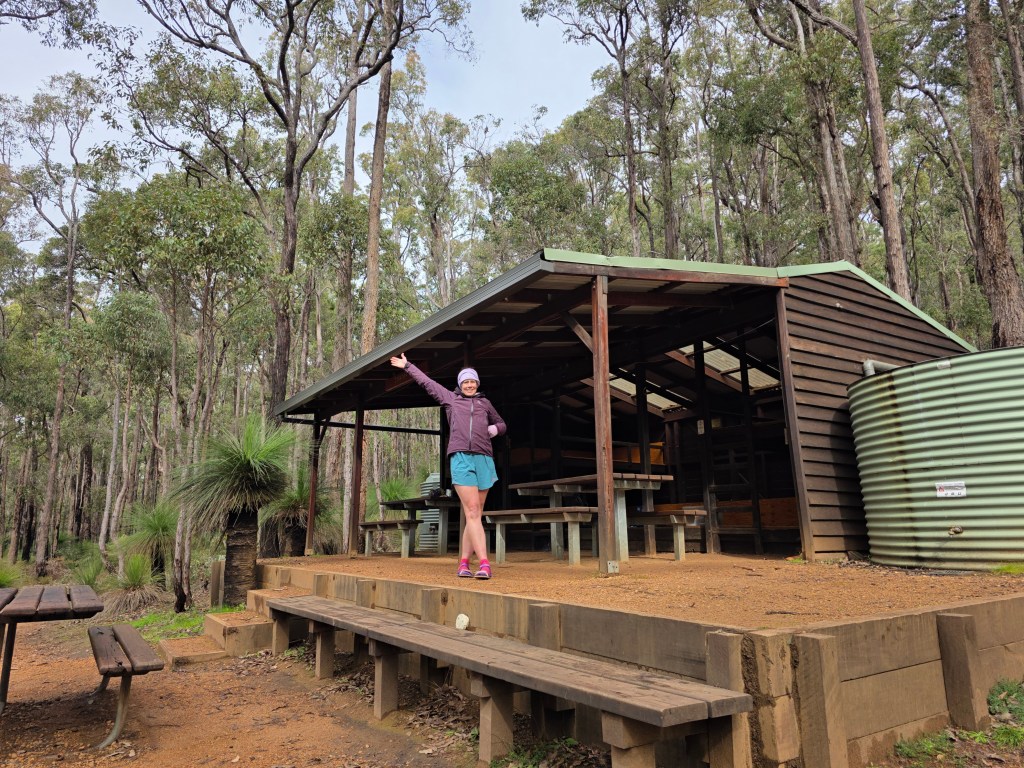
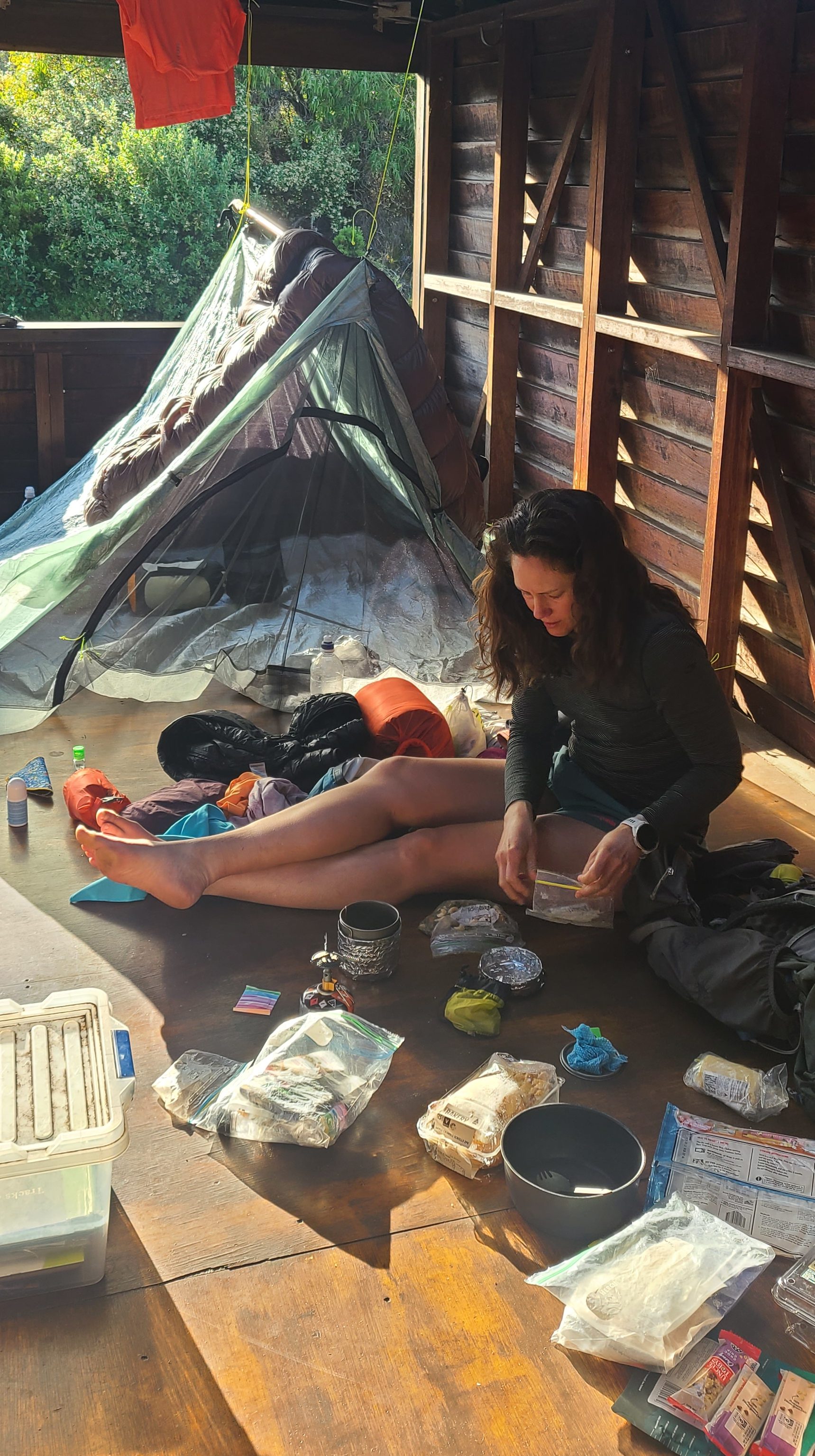
The shelters are maintained by a network of volunteers and in my experience were clean, tidy and pleasant to sleep in. There was only one night I chose to put up my tent and not sleep in a shelter. A few nights I put my tent up within the shelter (when there was ample space) as a bug net to fend off mosquitoes. For the most part I rolled my inflatable mat out directly on the sleeping platforms and never had any issues. Some hikers used a groundsheet under their pad however I didn’t find it necessary.
The toilets are serviced by DPAW who to my surprise, provide toilet paper. Although you need to carry your own TP or bidet the majority of toilets I visited had plenty of TP.
Most huts I visited had two water tanks. Due to the record high rainfall during the Spring of 2025, the tanks were always full and often overflowing. I was told by local hikers (and foundation volunteers) that the tanks are topped up in dry weather however I wouldn’t be comfortable relying on this.
Water
Each campsite has at least one water tank, during my hike the weather was cool and the tanks were full so the most water I needed to carry was two liters. Requirements will differ depending on how much you drink, the temperature and water availability. As noted above, I was told by local hikers (and foundation volunteers) that the tanks are topped up in dry weather however I wouldn’t be comfortable relying on this.
I always treated the tank water. I met locals who, because it was regularly raining, did not feel it was necessary to treat the water however I feel its better to be safe than sorry.
I started the trail with my sawyer squeeze however it quickly became blocked and I forgot to bring the backflushing coupler so I sent in home from Collie (15days/ 350km in) and used aquatabs for the rest of the trail. For hot drinks at camp I simply relied on boiling the water.

There was natural water sources along the trail however I only sourced water from tanks. The northern part of the track passes several mine sites, I didn’t feel I knew the area well enough to trust streams and creeks. If you are looking to cut down your water carry by using natural water sources as well as tanks FarOut could be helpful. If you are unfamiliar with FarOut see Navigation below.
Resupplying, track towns & food
One of the brilliant things about the Bib is that the trail passes directly through (or close by) towns making resupply logistics very easy.
When planning my hike I found it difficult to get a good understanding of what was available from each of the track towns. I read a lot of commentary about certain towns having “very limited” options and as a result ended up sending myself two resupply boxes, one to Balingup and one to Donnelly River Village. If I had my time over I would not have sent any boxes and resupplied solely from towns along the way. That said, I hiked the track more or less in peak season and I don’t have any health related dietary restrictions. Hikers with strict dietary requirements and those hiking in the off season may need to do more forward planning. Most of the trail towns are tourist hotspots and therefore do their best to cater for Bib Track hikers and Munda Biddi riders.
I generally booked accommodation one town ahead. I don’t like having too many bookings in place incase plans change and I decide to hike faster or slower than planned. This worked well for the most part however in peak season or school holidays it may be wise to book further in advance.
Below is a comprehensive run down of how I resupplied, where I took zeros, which towns I enjoyed and how I would do things differently.
Kalamunda
Length of food carry from this town: 9
Food resupply option: Coles and Aldi, Woolworths is out of town
How I resupplied: I organised my food for this section at home and flew it over with me. I pick up some fresh food, gas and a lighter from town before heading out on trail.
Gas resupply: Walker’s Mitre 10 (230g canister)
What I would change: The 9 day food carry was manageable because there were no long water carries through this section. On most days I was carrying less than 1 litre at time, double hutting and filling up half way through the day. I was aware of trail angles offering to drop food out to hikers along the trail, for example near Gringer Creek Campsite however I was concerned about the logistics of this, phone reception and re-shuffling things if I ended up ahead or behind schedule. In reality there was plenty of phone reception through the first section and most people arranged friends, family or trail angels to resupply them through this section. If I had my time over I probably would have reached out for help on the Bib Track Trail Angels facebook group and had someone drop food to me along this section.
Accommodation: I didn’t stay in town, I started the hike on the same day I flew to Perth.
In town eats: Jack & Jill Kitchen, they have an all day breakfast menu which I love. I had a big breaky for lunch before heading out on trail. Food was decent and they were happy for me to charge my phone. Is close to the Mitre 10.
Dwellingup
Length of food carry from this town: 6
Food resupply option: Dwellingup General Store
How I resupplied: Purchase In town at the Dwellingup General Store
Gas resupply: Dwellingup General Store
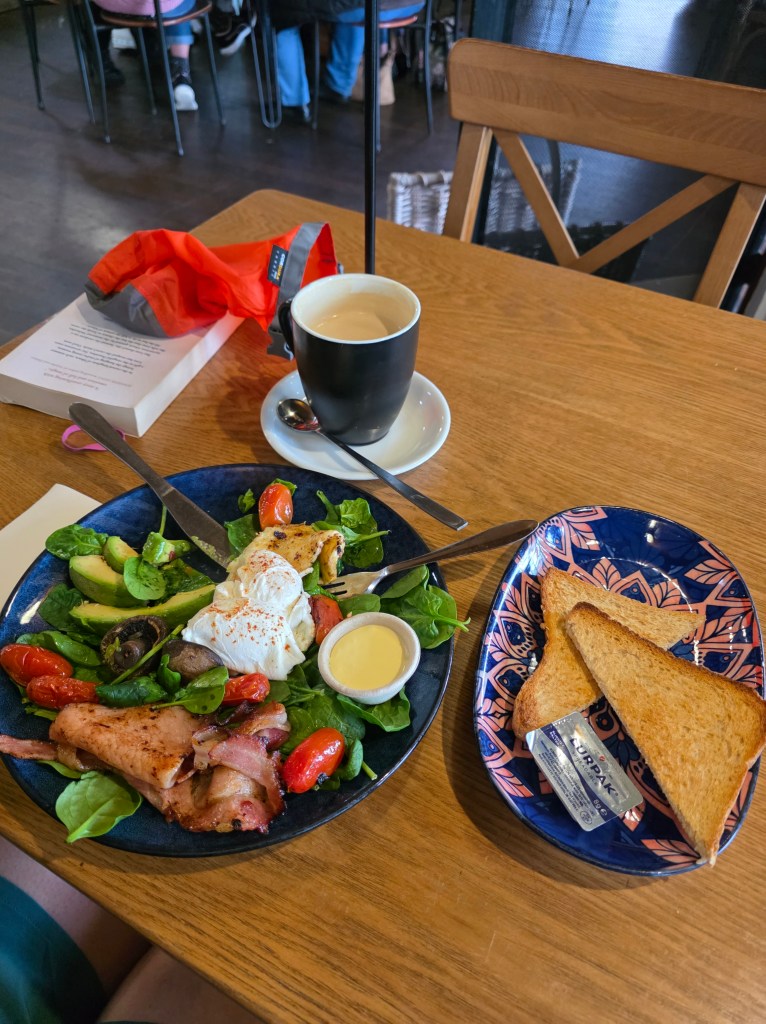
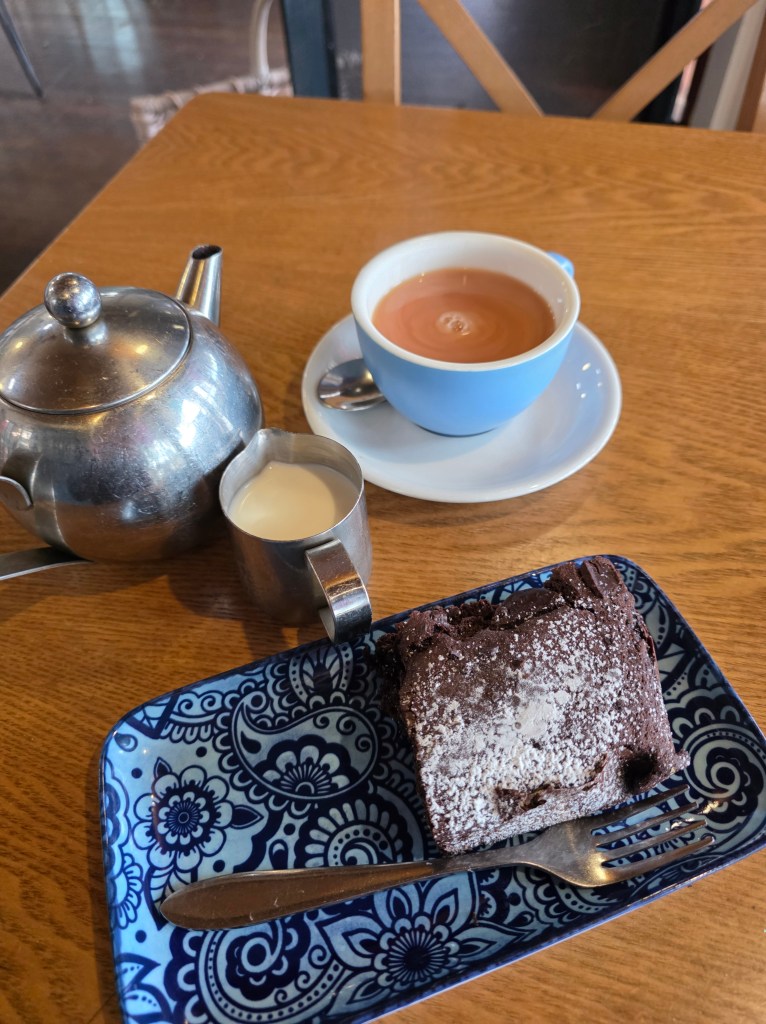
What I would change: Nothing, I was able to get everything that I needed from the General Store. I encountered a minor glitch where a school group had come through the prior day and bought the store out of wraps (my usual lunch go to) but I was able to easily substitute with corn cakes. The general store also sell a range of fresh food, capsicum, cheese, avocados. They also sell a range of ready made options such as soups, sandwiches and home made meals. I had my first experience with a Conti sandwich in this store, it was bloody delicious and the best Conti I ate on the whole trail.
Videos showing Dwellingup General Store options below.
Accommodation: Being the first town after a long 9 day stretch I had booked a hiker room in the caravan park before leaving home. I thought I would need a zero after 9 days on trail. In reality I didn’t need a zero, my body felt really good. The day I hiked into Dwellingup was the coldest day in Perths history for 50 years and we received 30mil of rain. I was pretty miserable and didn’t want to deal with the walk to the caravan or navigating shared toilet blocks and laundry in the rain. I ended up foregoing my deposit and staying in the little unit behind the Blue Wren Cafe. The owner doesn’t widely advertise but regularly rents it out to hikers. It has a kitchenette and laundry facilities and was exactly what I needed.
In town eats: Blue Wren, highly recommend. Other than buying a home cooked take away from the general store it was the only place I ate whilst in town.
Zero: No rest day – nero’d in and out. It is a cute little town, it would be pleasant to zero in. If you are looking to save money on accommodation the visitor centre has showers and laundry facilities and the next hut SoBo (Swamp Oak) is only 13km so you could easily have a shower, resupply, do your laundry and keep moving.

Collie
Length of food carry from this town: 4
Food resupply option: Woolworths and Coles. I read that the visitor centre stocks dehydrated meals but it was closed when I came through.
How I resupplied: In town at Coles
Gas resupply: I purchased gas from Crank’n Cycles (100g canister). I read online that Henderson Hardware also sells gas but did not check this.
What I would change: Nothing, Collie has all the main supermarkets and everything you need. There is also a bakery, chemist, physio and Chinese massage, everything a hiker could need.
Collie is ~7k walk off trail. If you are in a rush and not looking for a shower, zero or town stay it may be better to have someone meet you at the trailhead or somewhere along the track.
Accommodation: Black Diamond lodge – I highly recommend, the owners take good care of hikers. They provide a robe to use whilst doing laundry and because I arrived out of hours, detergent and coins. The bathroom is well stocked with body wash, shampoo and conditioner. The shared kitchen is very clean, well stocked and a pleasure to use. The only downside is that its a bit further to walk from the trailhead than some other hotels.
In town eats:
The Colliefields – stopped on my way into town and was disappointed. I ate some chips with my meal, the oil was old and my stomach was unsettled afterwards. I would not recommend eating here.
The Wagon – I enjoyed the coffee from here, if I had my time over would have bought food from here also.
Forrest French Hot Bread – I bought a Conti from here for lunch but did not enjoy it. I would not recommend.
Sizzles – Is more than it seems on the outside, located next door to the Blackdiamond lodge they do the usual friend chicken and fish but also fresh salads and home cooked meals. I had dinner here when I was caught out by the supermarkets closing at 5pm on a Sunday and really enjoyed it. I would recommend eating here or buying and cooking yourself.
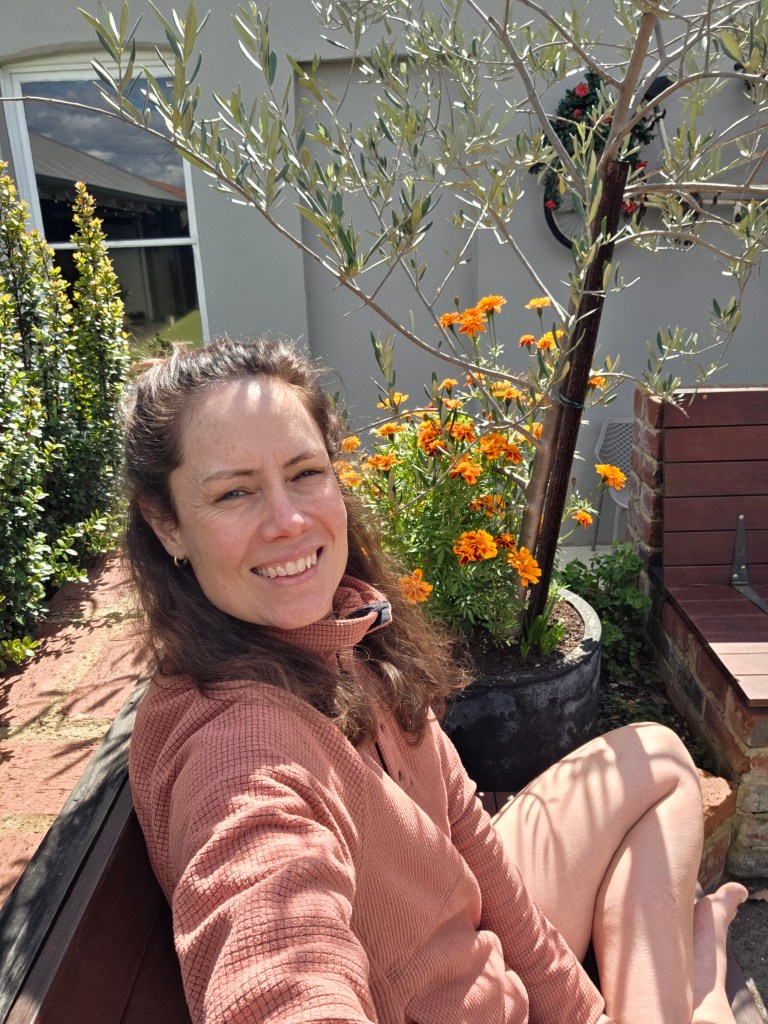
Zero: I zero’d in Collie because I heard it was a “big” town. I thought that would translate to it having a great selection of cafes but I was disappointed. Yes it has both major supermarkets, a physio, Chinese massage and chemist but I felt it lacked soul. I ended up spending my zero checking out the local museum, art stores and craft hubs and doing a bit of their street art trail and by the end of day the town had grown on my but if I had my time again I wouldn’t zero here. I would have saved the day to zero in one of the smaller cuter tourist towns with good cafes and less distance to walk between accommodation and the supermarket.


Balingup
Length of food carry from this town: 3
Food resupply option: Balingup Liquor & General Store
How I resupplied: Sent resupply box to the General Store
Gas resupply: I didn’t need to resupply gas here, had sufficient gas from Collie however the General Store is well stocked with gas.
What I would change: I would not send a box, I would resupply from the general store. They had everything I would want to purchase and more. All of the usual hiker fare including wraps, ramen, soups etc, dehydrated meals and fresh fruit, veg, deli meats and cheese. I ended up hiker boxing a lot of the stuff I sent here because I sent too much and my stomach turned at the thought of eating the same thing for another stretch.
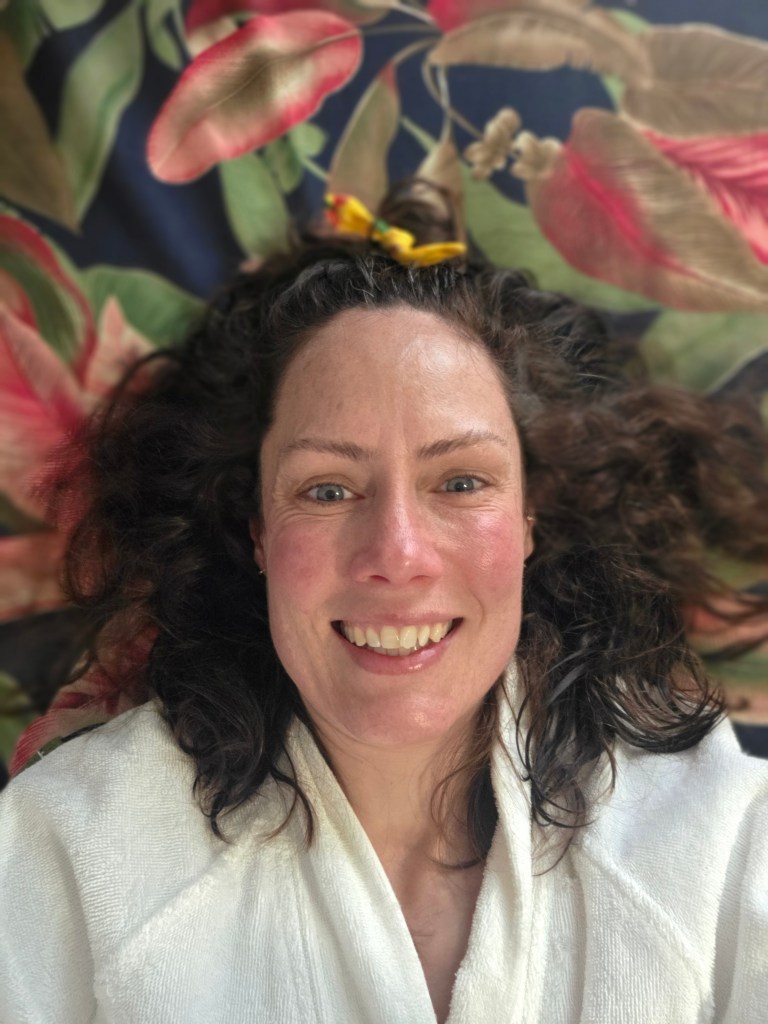
Accommodation: I stayed at Rails & Bails, local trail angels who have been welcoming hikers into their homes for over 20 years. They charge a small fee and in return offer internet, a warm bed, shower, laundry and a robe to sit in whilst doing your washing. It was a lovely experience, it felt like staying with my grandparents for the evening. Balingup visitor information can connect you, or suggest alternative accommodation options.
In town eats:
Mr Fosters – the pick of the cafes, good coffee, delicious breakfasts, incredible cakes and they also do a home cooked takeaway option that you can heat up at your accommodation. I did this when staying at Rails & Bails.
Greenman Cafe – I had breaky here the morning I left town, I don’t recommend it, the food was average, they played very loud hare krishna tunes and the cafe itself had an odd smell of baygon spray meeting incense.
Zero: I only stayed the night, nero’ing in and out of town. It is a quirky little town with good food, I would have preferred to zero here rather than Collie.

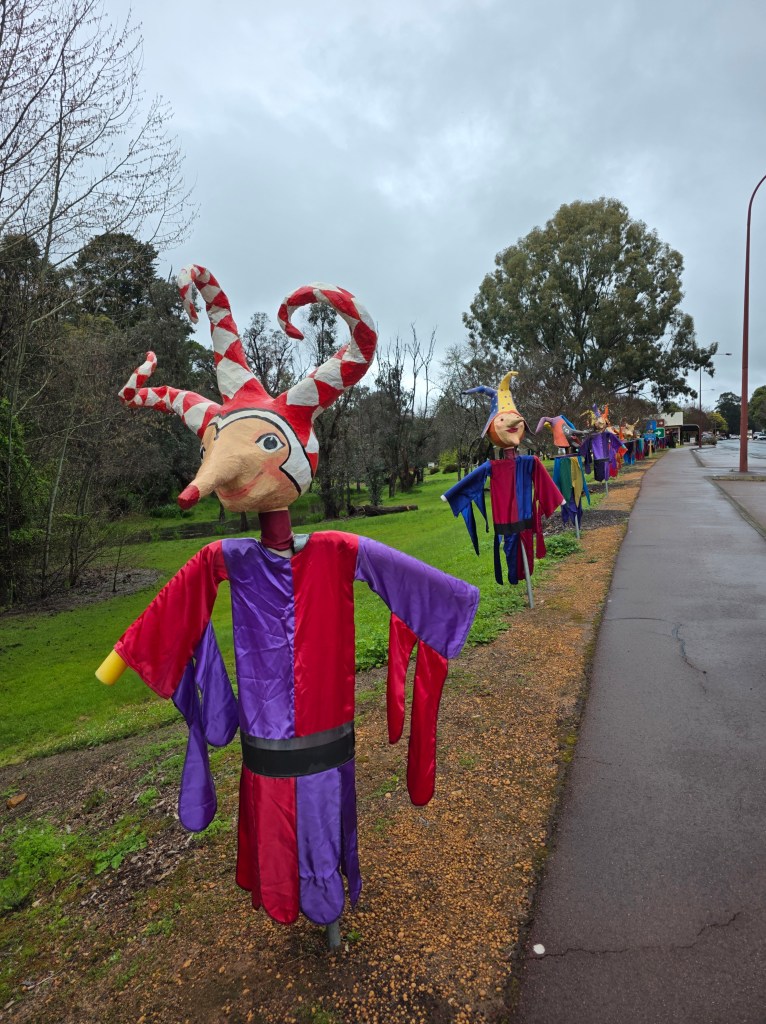
Donnelly River Village
Length of food carry from this town: 4
Food resupply option: Donnelly River General Store. Donnelly River is historic tourist village. The general store, reception, post office and cafe are all in one.
How I resupplied: Sent a box to DRV
Gas resupply: Purchased from DRV (only stock 230g)
What I would change: DRV do a great job in selling hiker portions of oats, powdered potato, trail mix and other hiking essentials. They also stock strive meals, peanutbutter, cheese and lots of snacks. The only thing I didn’t see was a decent lunch option such as wraps or corn crackers. If I had my time over I wouldn’t have sent a box. I would have called ahead to check their stock levels and carried anything they didn’t have from Balingup.
Accommodation: There is an array of accommodation options a DRV, to my knowledge the different rooms and rentals are owned by individuals and the reception at the village manages leasing them out. I stayed in a “bedsit” room which was about $115/night excluding linen. Linen is managed directly by DRV who charge $30/night. I went with this option instead of the schoolhouse dorm style accommodation as I was warned off it by other hikers. The bedsit was exactly what I needed for the night, the only drawback being the thin roof and walls. I could hear the conversations of the people staying above me.
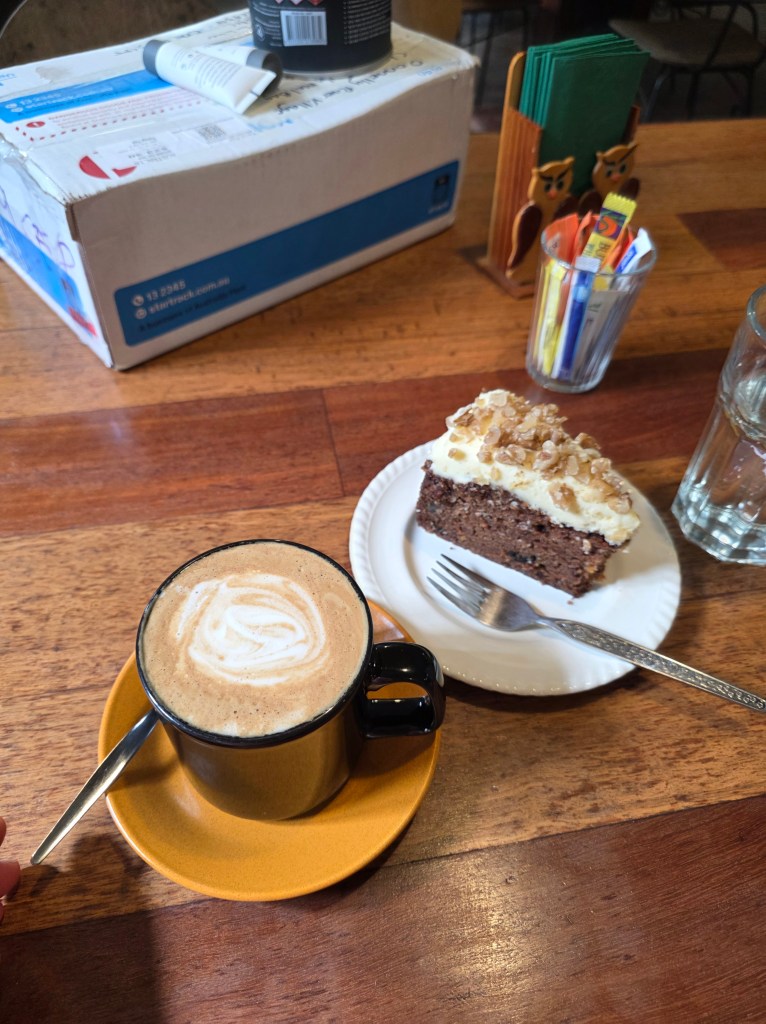
In town eats: the only option in DRV is the cafe at the general store but the food here was delicious. I really enjoyed the burger and the carrot cake. It was my favorite carrot cake of the trail, the cream cheese icing was the perfect blend of sweet and tangy.
Zero: I nero’d in and out of DRV. It is only 17k SoBo to Tom Road Campsite so I took the morning to visit King Karri and enjoy a Devonshire tea. I enjoyed my time here but would probably get bored doing a whole zero here.


Pemberton
Length of food carry from this town: 3
Food resupply option: Large IGA
How I resupplied: In town at the IGA
Gas resupply: General store, also available at the BP
What I would change: Nothing, the IGA was great. It had everything I needed.
Accommodation: I stayed one night at the Karri Forest Motel and one night at the Pemberton hotel. Both were good, but I preferred the Karri Forest Motel – the service was amazing, I arrived late and they stayed up to greet me and even gave me a discount. The room had all of the amenities a hiker needs including a razor and toothbrush and free onsite laundry. It is a little bit further out of town than the Pemberton Hotel however.
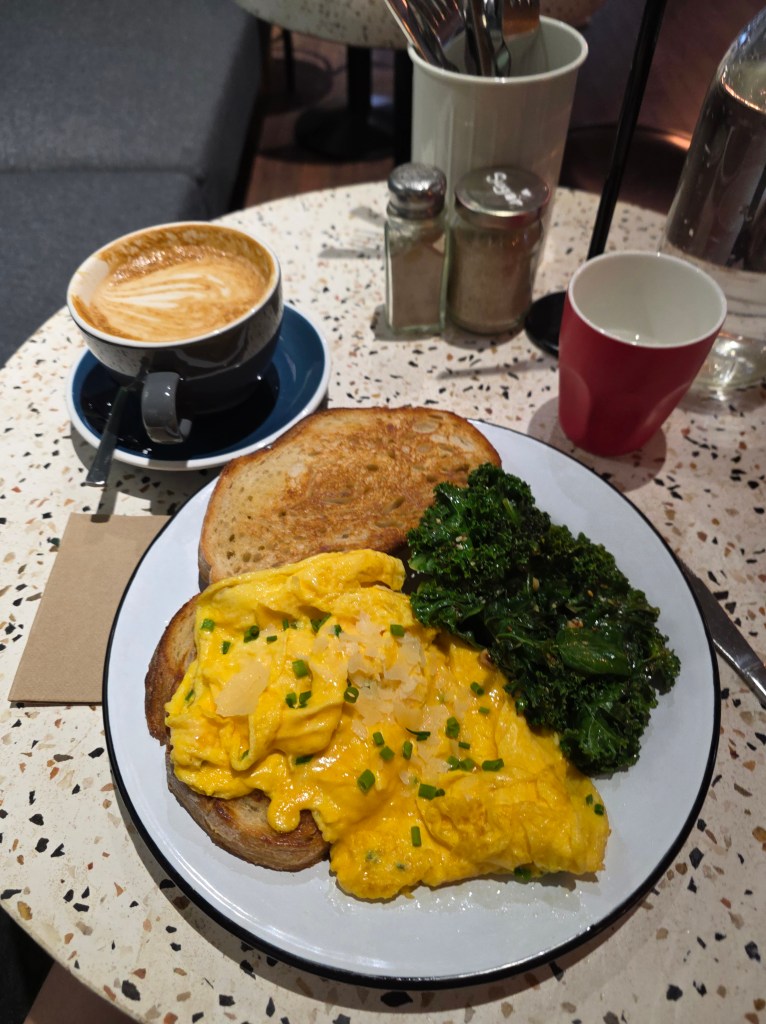
In town eats: Hands down Wild at Heart Cafe. After eating breaky here my first morning in town I didn’t bother trying anywhere else.
I also recommend Jaspers for dinner, its a beautiful steakhouse and whisky bar. The perfect on trail treat dinner.
Zero: I wasn’t planning to zero here but I was in a bit of a mood and ended up doubling through Beedelup Campsite after a prosecco at Karri Valley lodge. It was a 47km day and I didn’t arrive until 8.30pm so I took a full day to rest.
Northcliffe
Length of food carry from this town: 6
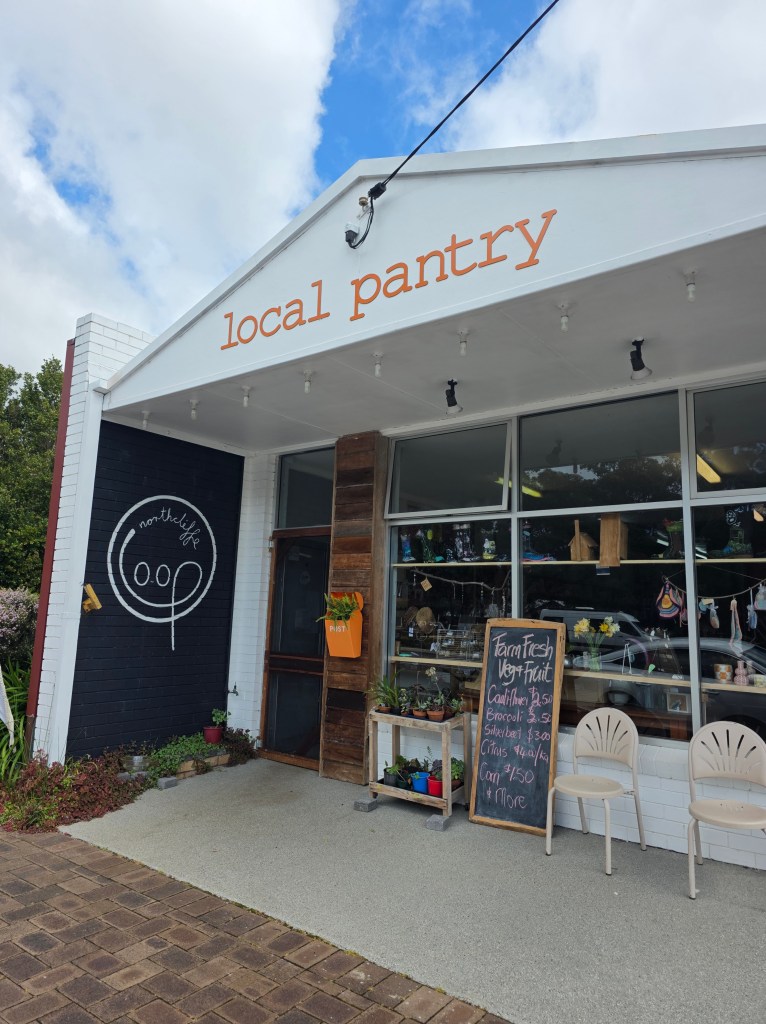
Food resupply option: General Store for basics, Visitor centre for dehydrated meals, Food Co-Op for the best range of snacks you will find on trail.
How I resupplied: In town. The Co-op stocks an incredible range of snacks, nuts, oats, TVP, grains, rice, granola, most things I needed. They also have fresh produce, cheese and home made slices and cakes. I got most of my resupply from the Co-op, an amazing haul from the hikerbox at the visitor centre as well as buying some freeze dried beef and chicken to add into ramen for dinner. I then got everything else from the General store, coffee bags, wraps, jerkey and tinned chicken.
Gas resupply: Visitor centre (stocked 100g and 230g canisters)
What I would change: Nothing. During my planning everything I read suggested the resupply in Northcliffe was “very limited” but it ended up being my favourite track town to resupply in the Co-op reminded me of my local co-op at home.
Accommodation: I didn’t stay in Northcliffe, the pub and caravan were fully booked due to a wedding. I had already made the decision to hike through when I found out about the B&B at the Naughty Noodle. The owner of the Naughty Noodle cafe hosts hikers and riders at a reasonable rate, you can call direct or the visitor centre may be able to assist with bookings. The owner is quirky and can be quite chatty so if you are an introvert it may not be the place for you.
In town eats:
Naughty Noodle Cafe – I had a delicious brownie and coffee here after coming off the trail. I didn’t have lunch here in the end but have heard good things.
There is a small bakery cafe next door to the General Store. I’m not actually sure what it is called and can’t find it on google but they had standard bakery items. I ended up getting a chicken wrap and coffee from here. Nothing to rave about.
Zero: I went straight through Northcliffe. The Visitor centre were super helpful. They filled my water bottles and watched my pack whilst I resupplied. They also have a free book library and charging station and the toilets are spotlessly clean. There isn’t much in Northcliffe. It feels like a dying town which is a bit sad, it would be fine to nero in and out but I wouldn’t recommend taking a zero here unless you had to due to injury.
Walpole
Length of food carry from this town: 4 and a few extra things to get me through to Denmark
Food resupply option: IGA (mid sized), the BP also has some good snacks and basics, the visitor center has a good range of dehydrated meals including freeze dried proteins.
How I resupplied: In town, mostly from the IGA. I purchased freeze dried proteins from the visitor centre to add into ramen. The visitor centre here was great I was able to get a new pair of injinji’s to replace my holey ones.
Gas resupply: BP, hardware store and visitor centre. Only the visitor centre stocks the 100g canisters.
What I would change: Nothing. The IGA here was expensive but it was probably still cheaper than the postage I would have paid and food I would have wasted sending a box ahead.
Accommodation: Walpole Hotel Motel, it was basic but clean, all I needed for my stay. I went with a standard room which was $130/night. They do have a shared hiker room for $50/night however I felt like solitude so I paid the extra to have my own space. Laundry is included.
In town eats: The BP, yes, as in petrol station. It came highly recommended by a number of people I met along the trail. I was confused until I went there. There is a cafe inside the BP and it is legit! They have everything from big breakfasts to quiche, salads to beef bourguignon and even basque cheesecake. I only ate here during my stay. They do take away versions of their home cooked meals that you can heat up at your accommodation. I had beef bourguignon and tiramisu for dinner and would have been contented if I had been served it at a restaurant.
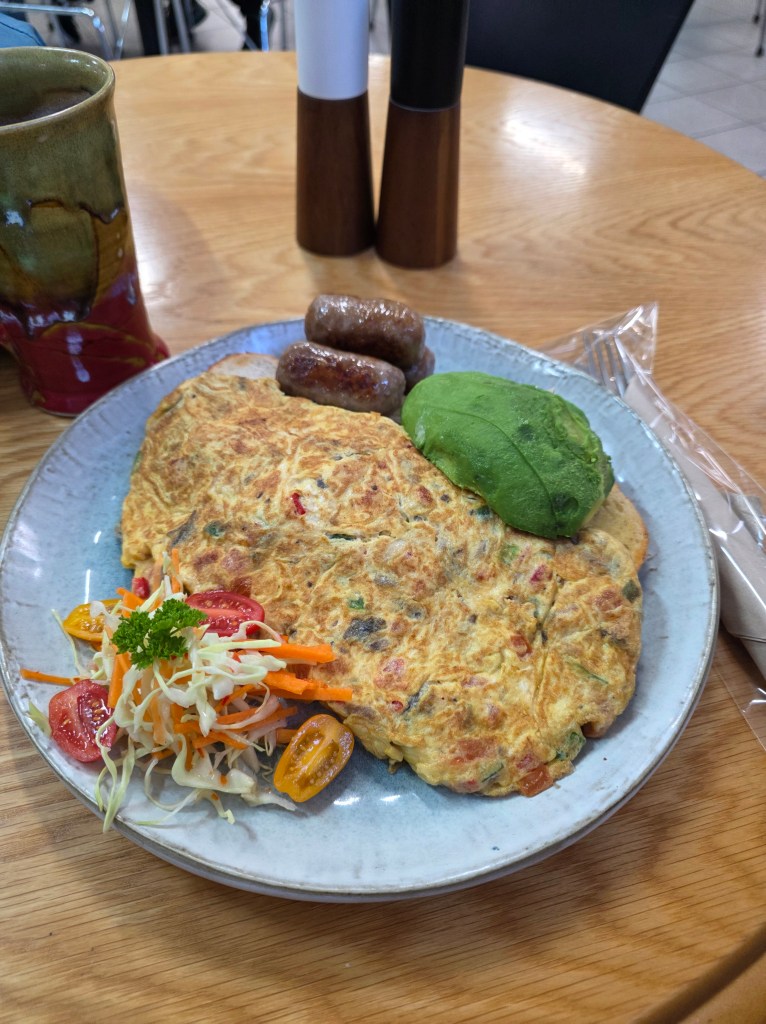
Zero: I had a full rest day here, mostly because I went straight through Northcliffe and was ahead of schedule (I had a set date that I was meeting Adam at the end of the trail). There isn’t a heap to do in town, its small but the BP cafe should keep most hikers occupied for a day.
Peaceful Bay
Length of food carry from this town: 3
Food resupply option: Small shop at the caravan park. Peaceful bay is a small town with only the caravan park which includes a small store and fish & chip shop. There is also a small cafe next to the caravan park store which also serves as an LPO.
How I resupplied: Mostly in town however I called ahead and carried a few things through from Walpole that the Caravan didn’t stock (wraps/ lunch options). I also carried out a lunch from the cafe.
Gas resupply: Not needed, I had enough to get me through to Denmark however the caravan park does stock gas in peak season. Best to call ahead to check in shoulder or off season.
What I would change: Nothing. The selection from the caravan park is a little disappointing and quite expensive but I still prefer the variety I had by resupplying in town rather than sending a box. It is a very short stretch through to Denmark which has a large supermarket. My only gripe is that the caravan park doesn’t sell travel size shampoo or conditioner, only full sized bottles and does not have a hiker box in which you could leave some behind for other hikers. With Denmark only 3 days away I simply didn’t wash my hair.
Accommodation: Peaceful Bay Caravan Park, to my knowledge they do not have any cabins and only offer tent sites. I camped here. The caravan park is the only option here unless you do a long day and hike straight through from Rame Head to Boat Harbour but I wouldn’t recommend that, this section is lovely, it would be a shame to rush through it.
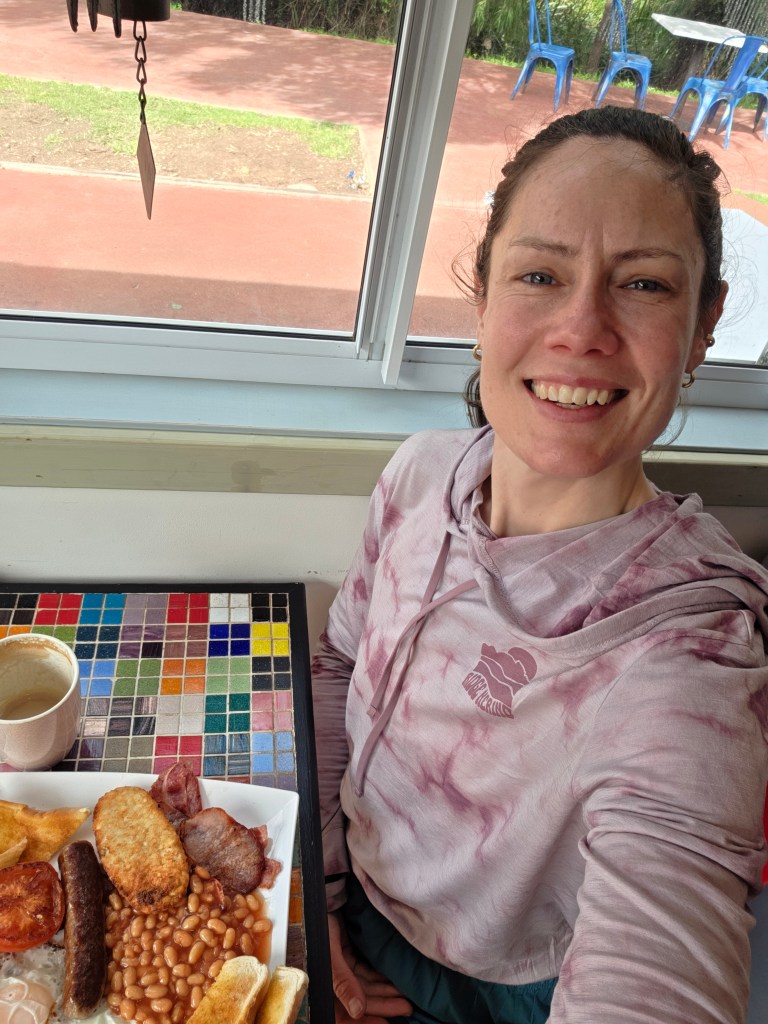
In town eats: The fish & chips was incredible, fresh flaky and moist. I don’t normally eat fish but gave it a go because it was locally caught and fresh and it did not disappoint. You must eat here if you are coming through.
The Nautilus cafe is next door to the fish & chips and was open from 8 to 12 when I came through. The coffee was as good as any on trail and the big break was big. Can’t complain, also worthwhile packing out some baked goods from here.
Zero: I didn’t zero here, I treated it like a campsite with extra amenities and food.


Denmark
Length of food carry from this town: 3
Food resupply option: Large IGA, The Green Pantry for bulk snacks and healthfoods – they even have a peanut butter machine!
How I resupplied: In town
Gas resupply: Hardware store (stocks 100g and 230g canisters)
What I would change: Nothing, this was my second favorite re-supply of the track. The IGA is huge and has everything you could need. The Green Pantry has delicious snacks and treats. It was helpful to be able to buy small portions of things from here. I also bought fresh peanut butter thanks to their machine in store!
Accommodation: Blue Wren backpackers – I highly recommend staying here. The rooms are simple but large and clean and you have a room to yourself for $50/night. The bathroom and kitchen is shared but has everything you need. Mark provides lifts around the Wilson Inlet when conditions do no permit walking across $50/car but only for guests. Laundry is onsite at an additional cost.
In town eats:
Kindfolk – for the best toastie and prettiest cake you will eat on trail.
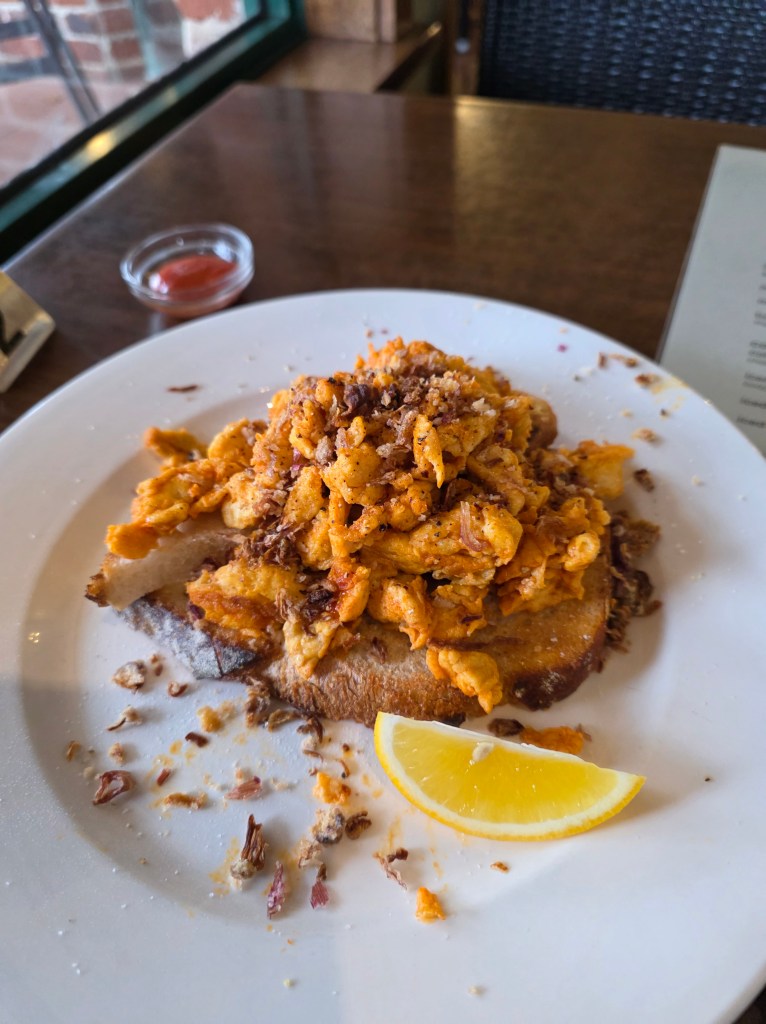
Ravens coffee – good coffee and a decent chili scrambled egg.
Denmark bakery – it has won lots of awards but didn’t find it overly special.
Bakery cafe – I had a Ruben for lunch it was fine but nothing amazing.
Green Pantry Cafe – for clean and vegan treats and breaky.
Zero: Although close to the end of the track I had a full zero here, mostly because I had set a date to meet Adam so there wasn’t any point in moving faster. I really enjoyed my time in Denmark. It is a great place not only for a zero but a holiday.


Albany
This is where I finished my hike so I didn’t resupply here however it is a major town (much bigger than Kalamunda) so you shouldn’t have any issues getting any last minute supplies should you choose to start you hike here and walk NoBo.
Adam had left a car at the end of the trail, because we had wheels we we stayed at the BestWestern on the outskirts of town. It is a pleasant hotel with a free laundry but it isn’t convenient to the Southern terminus for those on foot.
Visitor information centers
It wasn’t until Northcliffe that I discovered how helpful the visitor information centers are.

Each center offer different services however most offer the following;
- Hiker box – usually kept behind the counter, you need to ask.
- Pack minding
- Charging station
- Supplies like dehydrated meals and gas
- Hiking basics – socks and gear
- Showers and laundry facilities (Dwellingup).
On trail food opportunities
Food is life on trail, there are a couple of on track highlights if you can time it right.


| Location FarOut SoBo | Opening hrs Spring 2025 | Notes | |
| Mundaring Weir Hotel | km 16.2 | Mon to Thur 9am – 6pm Fri 9am – 9pm Sat 8:30am – 9pm. Sun 8am – 6pm | Can charge phones here. Delicious second breaky day 2 of the track |
| Mumby Pub | km 347.4 | Fridays to Sundays only | Closed when I passed by midweek |
| Karri Valley Resort | km 530.0 | Breakfast 7 – 10am Lunch 12 – 2.30pm Light grazing 2.30 – 5pm Happy hour 4 – 5pm Dinner 5:30 – 8:30pm | A 1km detour each way but well worth it. I enjoyed a Delicious steak sandwich lunch |
| Tree top walk coffee van | km 774.3 | 9am – 3pm | Excellent Carrot cake. No substantial food. |
| Peaceful Bay Fish and Chips | km 803.9 | Closes over winter. 11am – 6.30pm | Really fresh fish. Highly recommend. |
| Nautilus Cafe | km 803.9 | 8am – 12pm | Next door to the fish and chips. Excellent big breakfast |
A note for interstate travelers
It is worthwhile nothing that shops close early in WA, even the major supermarkets. I was caught out when the Coles and Woolworths in Collie closed at 5pm on a Sunday. Apparently this also occurs in Perth. Once I got into the swing of things I loved this about WA, that everyone has time to relax but I didn’t expect it.
Navigation
I found the Bib track to be really well marked. After a few days on trail I felt confident trusting the wauggals and would follow the track until I came to an unmarked intersection or a Wauggal indicated a turn. I only encountered a couple of points along the trail where I felt like there should be a Wauggal but I couldn’t see one.
Because the track is so well marked I solely used FarOut for navigation. I used FarOut (formerly Guthooks) on both the TA and PCT. I like that it tells me exactly where I am in relation to the trail and that other hikers can leave notes on track conditions, shelters and water collection points. The maps are affordable, are purchased for life and can be bought in a bundle if there is a few Aus and NZ trails you are looking to hike.

On sections that had re-routes I made sure to download the PDF maps before leaving town. Choice of navigation will depend on your experience and what you are comfortable with. Although I didn’t have any issues with navigation I did meet people who found themselves offtrack or turned around.
Pest management
I found the Bib track to be a relatively safe trail, however if certain pests are a concern for you, it may influence your timing or direction of travel.
Mosquitoes
Traveling SoBo the first time I experienced problem Mosquitoes was at Giants camp ~200km / 10 nights from the end of the track. Generally, the warmer the weather the more mosquitoes.
They typically came out around sunset for a couple of hours before dispersing. They seemed to be worse inside the shelter itself. Because there was plenty of room I strung my tent in the shelter on a few nights to use it as a mosquito net.
Camp rodents
I had my first rodent encounter at Swamp Oak Campsite ~230km / 10 nights into the trail. I hung all of my food and gear from that night onwards and never had any issues. The logbooks usually had good intel on whether a hut had an issue with rodents or possums.

I used a mini carabina on fishing line to hang my pack. I was skeptical that the fishing line would hold but it worked perfectly. I would string it over the beams of the hut so my pack was hanging freely in mid air. I saw people hang their packs on the hooks provided in the huts but the mice could (and did) easily get into packs when they were stored like this.
Food boxes are provided at most shelters have they are mostly plastic storage containers only big enough to hold a few food bags.
Its worthwhile noting that I only ever experienced one or two mice running around the shelters. It was nothing like we experienced in Northern Washington on the PCT where mice were in plague numbers running across you all night. The mice on the Bib never kept me awake.
Ticks
Out of all the potential nuisances of the track, ticks were my main concern due to the risk of contracting an energy sapping, lyme like disease.
I only saw ticks on the southern part of the track in sandy areas after the weather had warmed up (the last 2 weeks of the track traveling SoBo). I found ticks crawling up my leg after I had been sitting on sandy soil and walking through low coastal shrubs overhanging the trail. I was able to kill the ticks I found before they latched on.
Adam however, found a tick under his armpit after joining me for one night on trail at Muttonbird Campsite. It validated carrying the tick freeze, Permethrin cream and removal card 1,000km down WA. It was the first time I had removed a tick using the proper method rather than tweezers and it works really well. I highly recommend packing tick freeze and aremoval card.

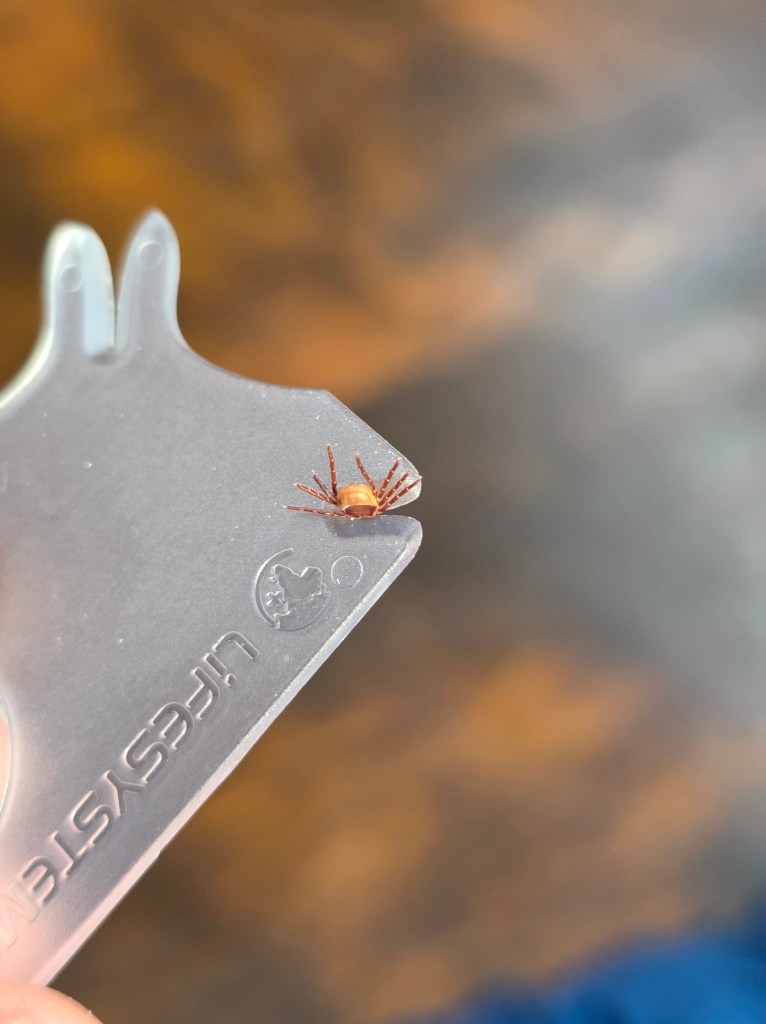
I understand ticks can be a problem on the Northern parts of the track however I think the weather was too cold for them when I travelled through. I did hear reports from other hikers of nymph ticks around Monadnocks Campsite but I never saw any.
Snakes
I was relentlessly warned about snakes the whole way down the trail. I don’t wear gaiters, this bothered a lot of people and they let me know it. Living in the Blue Mountains and growing up on the outskirts of the Royal National Park I have a healthy respect for snakes.
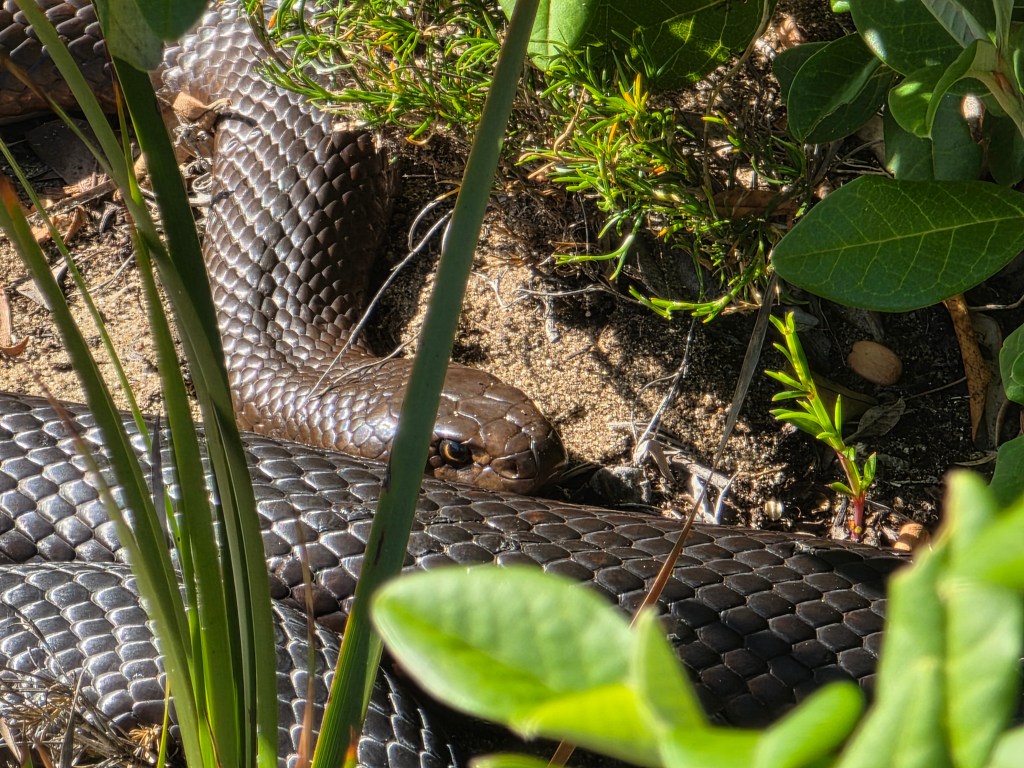
I spotted my first snake on the fire trail out of Beedelup Campsite, this was mid September, about half way through my end-to-end when i’d just started getting the occasional warm day. I saw 28 snakes on the trail in total and I expect more than that number saw me. They were most prolific on the Southern parts of the track, I put this down to the warmer weather but it could be the terrain.
The most I saw in one day was 11, it was the day I walked from Denmark to West Cape Howe Campsite. I found that the number of snakes I spotted was heavily impacted by how early I started walking. If I was first out on the trail I saw a lot more snakes and if other people had cleared the path ahead. Most of the snakes I encountered didn’t need much encouraging off the trail but a few of them in deep sleep took a while to move.
Other resources
- Bib Track foundation – I used their resources for trip planning as well as updates on track conditions along the trail.
- Beyond Wild Places – Elisha has created a guide to hiking the trail which I found useful to compare my itinerary and resupply plan against.
- Australian Hiker – I found Tims plethora of information a bit overwhelming but the weather stats were useful.
- Facebook groups – There are a number of groups, Bibbulmun Track Hikers, Bibbulmun Track and Bibbulmun Track End-To-End Group. Through these groups you will be able to connect with Trail Angels and get updates on track conditions including inlet crossings.
 Adam, Leigh and the Trees
You must be logged in to post a comment.